Renovating bathroom tiles often calls for epoxy or specialty tub-and-tile paints that resist moisture, heat, and daily wear. The following selections are designed for showers, tubs, and ceramic or porcelain tiles, offering quick-dry formulas, strong adhesion, and durable finishes. This guide highlights five top options and compares their key features to help you choose the right product for a bathroom refresh.
Summary of chosen products:
| Product | Brand | Key Benefit |
|---|---|---|
| Specialty Tub And Tile Paint, High-Gloss White | Ankita | High gloss, quick-dry touch up with built-in brush for precise application |
| Tub And Tile 2-Part Touch Up Paint, White | Rust-Oleum | Two-part epoxy acrylic formula, moisture resistant, durable finish |
| Tub & Tile Ultra Repair Finish Spray Paint | Krylon | Porcelain-like, chip resistant finish with strong durability in hot water |
| DWIL Tub And Tile Refinishing Kit | DWIL | 50–55 sq ft coverage, low odor, includes tools for efficient application |
| SENVEN Tub & Tile Refinishing Spray Paint | SENVEN | Spray-on refinishing with high abrasion resistance and fast drying |
Each option covers different application styles—from direct brush-on to spray finishes—so you can match your project pace and maintenance preferences. The following sections detail five selected products, including key specs and usage considerations for epoxy and tub-and-tile painting in showers and bathrooms.
Specialty Tub And Tile Paint, White

The Ankita tub and tile paint is designed to restore a glossy, durable finish on porcelain, fiberglass, enamel, acrylic, and cast iron surfaces. It features a built-in brush for precise application, helping to minimize mess and ensure a smooth coat. The product is described as water resistant, quick-drying, and long-lasting, making it suitable for high-humidity bathrooms. It aims to deliver a seamless surface with a high-gloss appearance, and claims heat resistance up to 392°F, aiding performance in hot baths or showers.
Key considerations: This option prioritizes precision and gloss. It works well for spot touch-ups or small remodels, but coverage area is not specified in the listing. While durability is highlighted, users should assess the level of surface preparation required and follow recommended curing times for best results. It is one of the more convenient choices for DIY refinish projects with a built-in applicator.
DWIL Tile Paint, Tub And Tile Refinishing Kit

The DWIL kit includes a 16.5-ounce tub-and-tile paint with broad applicability and a relatively large coverage estimate of 25–30 sq ft per can. It emphasizes a water-based acrylic formula, low odor, and easy cleanup—appealing for indoor bathroom projects. The product is marketed as durable against wear and suggests simple maintenance without heavy use of solvents. The kit contains tools intended to simplify the process, such as a sponge roller, a brush, gloves, and masking materials.
Key considerations: Water-based formulas tend to have lower odor and VOCs, which is advantageous for bathrooms with limited ventilation. For larger surfaces, confirm total coverage with the included tools and consider whether multiple coats are needed. While convenience is a benefit, ensure compatibility with bathroom substrates and verify drying times in your climate to minimize disruption.
Krylon Tub & Tile Ultra Repair Finish Spray Paint
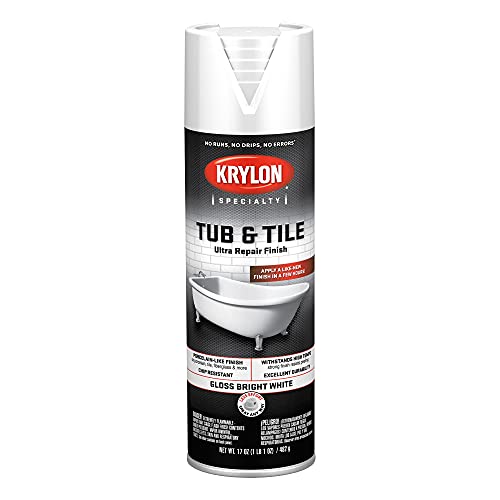
This Krylon option provides a porcelain-like finish with chip resistance and durability in hot water. The aerosol format makes it an easy choice for covering irregular surfaces or smaller areas without a brush. The spray-on application is typically fast and can produce an even coat when used with proper ventilation and multiple light passes. Durability in wet bathroom environments is highlighted, contributing to a long-lasting refinished surface.
Key considerations: Spray finishes can be convenient, but masking surrounding areas and ensuring even coverage are important. Temperature and humidity can affect spray drying and adhesion. Read the can instructions for recoat windows and cure times. This option suits projects where quick spray coverage is preferred over a brush-on approach.
SENVEN Tub & Tile Refinishing Spray Paint

SENVEN’s spray paint targets ceramic, porcelain, and fiberglass surfaces such as tiles, sinks, and tubs. It emphasizes high abrasion resistance, moisture tolerance, and corrosion resistance, with a focus on preventing peeling in humid bathroom environments. The single-step spray application is described as quick and convenient, with guidance to shake well and apply multiple uniform layers for best adhesion and thickness control.
Key considerations: Spray-on refinishing can deliver rapid results with less labor, but surface prep and ventilation are critical. The product’s durability claims are appealing for high-use bathrooms; however, testing on a small area first is prudent to ensure compatibility with your specific tile and substrate.
DWIL Tub And Tile Refinishing Kit

This DWIL kit provides a comprehensive refinishing package designed for bathrooms, with coverage for 50–55 sq ft. It emphasizes a low-odor, water-based formula and includes a user manual and accessories to facilitate a clean, efficient project. The kit is positioned for both walls and fixtures such as sinks and bathtubs, offering a cohesive approach to tile refinishing in bathroom spaces.
Key considerations: The kit’s broader coverage makes it suitable for mid-sized to larger bathrooms. Review substrate compatibility for specific tub or tile materials and follow the included instructions for surface prep and application to maximize adhesion and durability. Ventilation remains important with any refinishing product, even those labeled as low odor.
Buying Guide: Key Purchase Considerations And Comparisons
- Surface compatibility: Ensure the product is suitable for the specific bathroom materials (porcelain, fiberglass, ceramic, enamel) and that it adheres well to your tub, tile, or sink surfaces.
- Finish and durability: Choose between high-gloss vs. satin/ultra-durable finishes. Consider resistance to heat, humidity, and daily cleaners used in bathrooms.
- Application method: Brush-on, spray, or two-part systems offer different pros. Brush-ons can provide control for detailed areas; sprays offer speed and uniform coverage; two-part systems may yield exceptionally durable results but require mixing and timing.
- Odor and VOCs: For indoor bathroom projects, low-odor and low-VOC formulas are preferable, especially in homes with limited ventilation or occupants sensitive to fumes.
- Coverage and curing: Check estimated square footage per can or kit and cure times. Larger bathrooms may require multiple cans or kits and time for full hardening before use.
- Cleanup and safety: Water-based formulas are easier to clean up and generally safer for indoor use. Follow safety guidelines, wear protective gear, and ventilate the area during application and curing.
- Maintenance expectations: Consider how often the refinished surface might need touch-ups and whether the product allows for future re-coating without excessive prep work.
Overall, epoxy and tub-and-tile paints provide a practical path to refreshing showers and bathrooms without full tile replacement. When selecting a product, balance the desired finish, application style, and room conditions to achieve a durable, long-lasting result.