Choosing the right end grain cutting board boosts knife longevity, kitchen hygiene, and meal prep efficiency. The following five boards combine durable end grain construction, generous work surfaces, and practical features like juice grooves and easy-grip handles. Use this guide to compare sizes, materials, and design details that help protect your knives while adding style to any counter.
| Product | Brand | Size / Weight | Material | |
|---|---|---|---|---|
| SHUMARU Mahogany End-Grain | SHUMARU | 20×13×1.6″ | Mahogany | Handmade, ergonomic grips |
| Ziruma End Grain Cutting Board | Ziruma | 16×11″ | Acacia | End grain protection, heavy-duty |
| QUELLUXE End Grain Acacia Board | QUELLUXE | 30×20″ | Acacia | Extra-large workspace, juice grooves |
| Howizz Acacia Large Cutting Board | Howizz | 20×15″ | Acacia | Non-toxic finish, easy-grip handles |
| Sonder Los Angeles Alfred | Sonder Los Angeles | 17×13×1.5″ | Black Walnut (End Grain) | Non-slip feet, juice groove |
SHUMARU Mahogany End-Grain Board
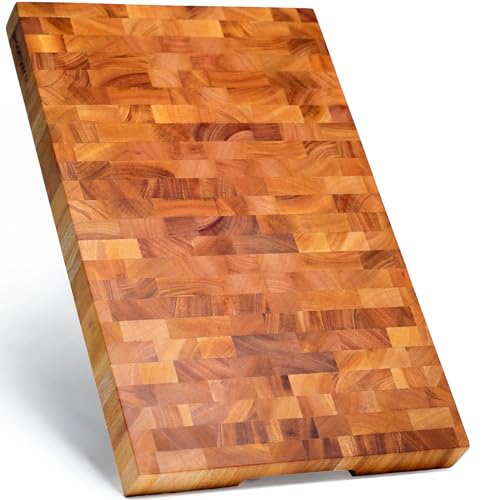
The SHUMARU mahogany board is handmade in Bali, delivering a unique, artisanal piece with richly grained, sustainably sourced mahogany. The end-grain surface is triple-sanded and finished with a food-safe oil, creating a silky-smooth surface that’s gentle on knives and self-heals over time. A spacious 20×13 inch work area offers ample room for chopping, carving, plating, and serving. Ergonomic side grips are designed for easy lifting, even when fully loaded, and non-slip feet help keep the board steady on the counter.
Ziruma End Grain Cutting Board

Ziruma’s end grain board uses acacia wood and emphasizes durability with a thick construction and a reversible design. The end grain layout minimizes knife wear while displaying a warm, natural variation in wood tone. The board’s generous 1.5 inch thickness helps resist warping and cracking under heavy use. This model is positioned as a reliable multi-purpose workhorse suitable for daily chopping, dicing, and serving tasks in home kitchens or busy prep spaces.
QUELLUXE 30″ X 20″ Acacia End Grain Board

QUELLUXE offers an extra-large end grain cutting board, constructed from premium acacia wood for durability and longevity. Its size creates a vast workspace perfect for big meal prep, rolling dough, or carving poultry. A deep juice groove helps manage liquids, while recessed handles enable easy lifting and moving. This board doubles as a countertop work surface, and its robust construction is designed to withstand frequent, heavy-duty use.
Howizz Acacia Large End Grain Board

Howizz presents a thick, 20×15 inch acacia end grain board with a non-toxic, pre-oiled finish. The surface is designed to resist cuts and warping, while the side handles offer convenient lifting and carrying from prep to table. The juice grooves and thoughtful design ensure cleanup is straightforward, making it a practical option for frequent use in busy kitchens and catering setups.
Sonder Los Angeles Alfred End Grain Board
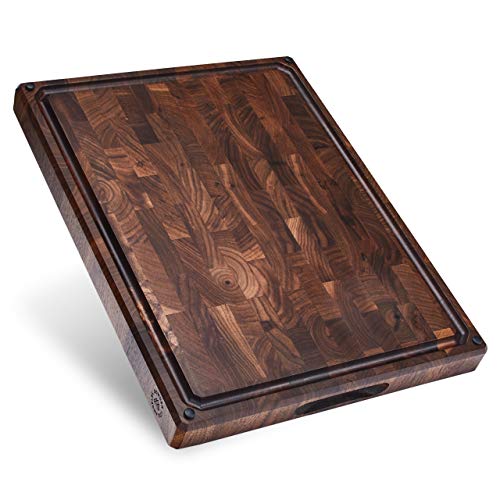
Sonder Los Angeles Alfred is crafted from American black walnut and features an end grain surface for enhanced knife protection and durability. The board includes non-slip feet and a juice groove, helping to stabilize prep work and keep surfaces clean. Built for longevity, its warm, dark tones lend a premium aesthetic to any kitchen, supporting both daily tasks and special entertaining occasions.
Buying Guide: End Grain Board Considerations
End grain boards provide superior knife protection and self-healing properties, but choosing the right one depends on several factors. Consider these perspectives to balance performance, maintenance, and cost:
- Material and density: End grain boards are commonly made from acacia or hardwoods like mahogany and walnut. Hardwoods resist deep knife marks and show beauty over time, but may require regular conditioning with food-safe oil.
- Size and layout: For larger kitchens or frequent meal prep, a big board (such as 30×20 inches) creates ample workspace. Smaller boards fit compact counters but may require more frequent reorientation during prep.
- Finish and maintenance: Look for food-safe oil finishes and consider the ease of cleaning. Boards with juice grooves help prevent countertop messes, while non-slip feet keep boards steady during use.
- Reversibility and features: Reversible boards offer extended life. Features like integrated handles, well compartments, and edge-gripping designs improve handling and organization during prep and serving.
- Durability and care: End grain surfaces self-heal better over time but require occasional conditioning. Avoid dishwasher exposure and clean with mild soap and water after use, then dry thoroughly.
- Price and value: High-quality end grain boards command premium prices due to craftsmanship and material quality. Evaluate long-term durability and usage patterns to determine value.
- Food safety and sourcing: Check for boards sourced from sustainable timber, with food-grade oils and non-toxic finishes to ensure kitchen safety and environmental responsibility.
In practice, the best end grain board balances generous cutting space, knife-friendly surface, and practical maintenance. For home cooks who frequently prepare larger meals or entertain guests, a 30×20 inch model with an integrated juice groove and sturdy handles may justify the investment. For daily use in smaller kitchens, a 17–20 inch board with non-slip feet can provide reliable performance without dominating the counter space. Material choice—acacia, mahogany, walnut—affects look, durability, and care; each offers distinct advantages for an American kitchen.