Choosing the right insulation improves energy efficiency, reduces heating and cooling costs, and enhances indoor comfort. This guide highlights top R-30 fiberglass insulation options and strong alternatives that fit common 2×8, 2×10, and attic applications. Each product features clear installation notes, coverage, and moisture considerations to help you compare quickly.
| Product | Type | Coverage (approx.) | Moisture/Barrier |
|---|---|---|---|
| Owens Corning 427 SQFT (8 Bags) R-30 Unfaced | Unfaced Fiberglass Batt | 426.64 sq ft | Unfaced; no moisture barrier |
| Knauf R-30 Kraft Faced (8 Bags) | Kraft Faced Fiberglass Batt | 440 sq ft | Kraft moisture barrier |
| Owens Corning R-38 Unfaced Batt | Unfaced Fiberglass Batt | 512 sq ft | Unfaced; moisture minimal concern |
| Owens Corning R-19 Faced Roll | Face Roll Fiberglass | Typically 23″ x 39.2′ per roll | Faced with kraft |
| R-13 Kraft Faced Fiberglass Roll | Fiberglass Roll | 32 ft (approx. 40 sq ft per roll) | Kraft faced |
Owens Corning Unfaced R-30 Batt, 8 Bags

Owens Corning offers a bulk set for R-30 unfaced fiberglass insulation, designed to fit 2×10 floor-ceiling and attic spaces. This option is supplied as two bundles of four bags each, totaling eight bags with approximately 426.64 square feet of coverage. Being unfaced, it provides a flexible option for spaces requiring a dedicated moisture barrier to be added locally or when interior vapor barriers exist. The absence of a kraft facing can simplify installation in certain configurations, while still delivering a robust R-30 performance for mid-attic or floor applications.
Key considerations: unfaced insulation reduces potential vapor drive conflicts in some assemblies, and it is compatible with various ventilation strategies. However, ensure adequate air sealing and ventilation to prevent moisture buildup in attic spaces. As with any loose or batt insulation, appropriate personal protective equipment should be used during handling and installation.
Knauf R-30 Kraft Faced Batt, 8 Bags

Knauf’s R-30 Kraft Faced batt insulation is designed for 2×8 floor or attic installations, with a high-density formulation that helps create a stable, energy-efficient barrier. The product arrives as eight bags total, delivering approximately 440 square feet of coverage. Kraft facing includes a moisture barrier that can be advantageous for exterior surfaces or in layers where a dedicated moisture barrier is required by code or local climate conditions. The kraft facing adds tear resistance during installation and a finished facing layer for certain interior applications.
Key considerations: faced insulation provides a built-in moisture barrier and can simplify installation in spaces with exterior exposure. For interior cavities, ensure that the vapor barrier alignment matches local code requirements and that there is adequate ventilation to prevent moisture accumulation.
Owens Corning R-38 Kraft Faced Batt, 8 Bags
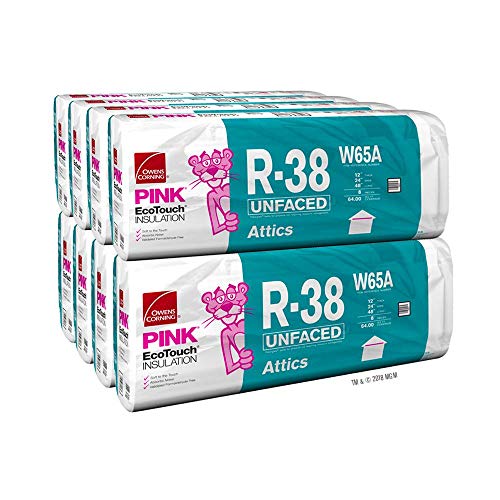
This option expands the R-value spectrum with R-38 kraft-faced batt insulation suitable for attic spaces and higher-ceiling configurations, typically aligning with 2×12 or deeper joist arrangements. The product is distributed in eight bags, totaling a larger volume for attic applications where a higher thermal barrier is desired. Kraft facing offers a built-in moisture barrier, which can be beneficial in climates with higher humidity or in installations near exterior walls.
Key considerations: higher R-value helps reduce heat transfer in attic spaces but may require more careful installation to avoid gaps and compression. Ensure truss bays are properly filled, and that the moisture barrier is positioned to match ventilation and vapor control strategies in your home.
Owens Corning R-19 Faced Fiberglass Roll

This R-19 faced roll provides a flexible option for 2×6 walls, floors, crawlspaces, and attics, delivering a solid balance of thermal and acoustical control. The roll width of 23 inches and a length of roughly 39 feet per roll makes it suitable for longer runs and standard stud cavity installations. The kraft facing adds a moisture barrier for certain assemblies and can help protect against moisture intrusion when installed with appropriate wall or attic barriers.
Key considerations: rolls offer easy conformability around irregular cavities and around wiring and pipes, but care should be taken to avoid compression during installation, which can reduce R-value. Plan for proper vapor controls and ensure that the roll is cut accurately to fit without leaving gaps.
R-13 Kraft Faced Fiberglass Insulation Roll

This R-13 kraft-faced fiberglass roll offers a lightweight solution for smaller margins in exterior walls, interior walls, and ceiling cavities. It is packed with a natural binder and eco-friendly materials, presenting a lower-density option while maintaining thermal and acoustic performance. The kraft facing adds a moisture barrier suitable for some exterior applications and certain interior assemblies where vapor control is needed. The compact profile makes it ideal for retrofit projects or tight spaces.
Key considerations: R-13 is not a high-R option, so use in conjunction with other insulation layers or in moderate climate zones where the overall home envelope benefits from supplemental insulation, air sealing, and proper ventilation. Ensure that the facing orientation aligns with local building codes and that there are no gaps at joints or around penetrations.
Introduction to Buying Guide
Selecting the right insulation involves evaluating R-value needs, space constraints, moisture control, and installation ease. In ceilings and attics, higher R-values reduce heat gain and loss; in walls, the balance between density, vapor control, and fit matters. Faced insulation simplifies moisture management in some assemblies, while unfaced options offer flexibility for custom vapor barriers. All product choices should align with local climate, building codes, and ventilation plans to prevent moisture-related issues and ensure long-term performance.
Buying Guide: Key Purchase Considerations
- R-Value Requirements: Identify the R-value targets for each space (attic, walls, floors) based on climate zone and code requirements. Higher R-values in attics reduce heat loss, while walls may require a balance with moisture barriers.
- Faced vs Unfaced: Faced insulation includes a moisture barrier (kraft) that can simplify vapor controls in certain assemblies. Unfaced offers flexibility when you plan to install a separate vapor barrier or in spaces where no barrier is needed.
- Moisture Management: In humid climates or exterior walls, moisture control is critical. Consider products with moisture barriers, proper ventilation, and air sealing to prevent condensation and mold.
- Space and Fit: Measure joist spacing (e.g., 2×8, 2×10, 2×12) and ensure batt widths fit without compression. Rolls are useful for irregular cavities or retrofit projects, while batts can be faster for standard layouts.
- Installation Considerations: Unfaced fiberglass requires proper framing sealing, while faced options should be placed with the facing against the interior or exterior side as specified by code. Tools like protective gear, knives for cutting, and staple guns ease installation.
- Local Codes and Safety: Always follow local building codes and safety guidelines. Use protective equipment during installation and dispose of packaging properly.
These selections provide a spectrum of fiberglass insulation choices suitable for R-30 needs and related applications. When selecting, consider your specific space, climate, and ventilation plan to optimize energy efficiency and indoor comfort. Avoid over-compression during installation, ensure continuous coverage, and seal gaps around penetrations for best performance.