Protecting a basement from flooding is essential, especially during power outages and heavy rainfall. This guide highlights top 1 HP and near-1 HP sump pump systems with battery backup, emphasizing reliability, backup capacity, and ease of installation. Each choice balances primary pumping power with a robust battery-backed option to minimize flood risk when electricity fails. Below you’ll find curated product sections, a quick summary table, and practical buying guidance to help you compare features and choose the right system for your home.
| Product | Primary Pump | Battery Backup Capacity | Approx. Backup Flow (GPH) |
|---|---|---|---|
| WAYNE WSS30VN 1/2 HP Sump Pump | 1/2 HP | Requires 12V battery (not included) | Up to 5,100 GPH primary; backup supports up to 10,000 gallons per charge |
| The Basement Watchdog Big Combo CONNECT | ½ HP PSC primary | Integrated WiFi-ready battery backup | Backup 1,850 GPH at 10 ft; 2,600 GPH at 0 ft |
| Westinghouse 1/2 HP Sump Pump Battery Backup Combo | 1/2 HP | Battery backup module | Backup 2,700 GPH |
| PUMP PARTNER Backup Power Station | Not specified as HP in listing | 51.2V 40Ah LiFePO4 battery | Up to ~2 kWh usable energy for typical single-day use |
| Zoeller Basement Sentry High Performance | 1/3 HP primary | WiFi-enabled backup | Real-time status; primary and backup integrated |
WAYNE 1/2 HP Sump Pump With Battery Backup

The Wayne WSS30VN is designed for indoor basement protection with a 1/2 HP motor and integrated float switch. It’s engineered for heavy water flow and remains operable during power outages when paired with a compatible back-up battery. The system ships preassembled for quick installation and fits standard 16” basins, minimizing the need for additional drilling or adjustments. Battery compatibility is essential for backup readiness, though the battery itself is not included in the base package.
Features highlight: indoor use, up to 5,100 GPH (primary), backup capable with external 12V battery, rapid drop-in installation in about 15 minutes, compatible with standard sump basins. This unit is a practical option for homeowners seeking a reliable backup solution without complex wiring.
The Basement Watchdog Big Combo CONNECT
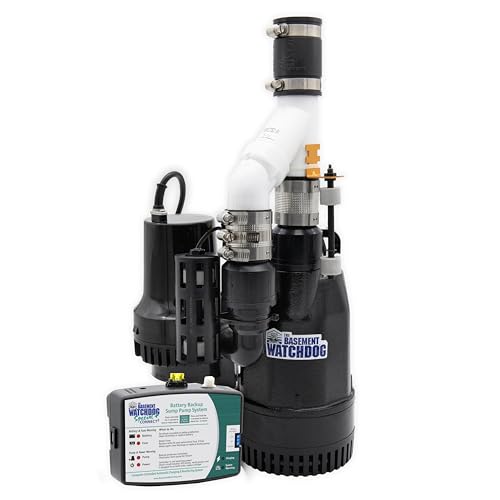
This system combines a ½ HP PSC primary pump with a WiFi-capable battery backup. The primary pump delivers 3,540 GPH at a 10 ft lift and 4,400 GPH at 0 ft, while the backup pump provides 1,850 GPH at 10 ft and 2,600 GPH at 0 ft. The WiFi-enabled monitoring helps you track power, battery status, and pump performance, issuing alerts if maintenance is needed. A practical choice for homeowners who want continuous monitoring alongside robust backup capacity.
Westinghouse 1/2 HP Sump Pump Battery Backup Combo

Westinghouse combines a 1/2 HP primary with a capable backup system. The model emphasizes reliable performance, with a backup capable of handling water flow during outages. The metal bar connection between pumps helps with alignment and simple adjustments. A sturdy option for homeowners who want quiet operation and dependable backup performance without complex setup.
PUMP PARTNER Backup Power Station

The Pump Partner system is purpose-built as an automatic backup power solution for basement sump pumps. It features a 51.2V 40Ah LiFePO4 battery, designed for extreme weather and multi-day outages. The enclosure is all-metal with temperature sensors, cooling, and high-airflow ventilation. It’s engineered for year-round standby operation and can deliver sufficient energy for most single-day emergency drainage needs, with no plumbing or electrical modifications required for installation.
Zoeller Basement Sentry High Performance

The Zoeller Basement Sentry integrates 24/7 mobile monitoring with a true 1/3 HP primary sump pump and a backup pump. Built-in WiFi provides real-time status, alerts, and notifications via texts, emails, or a companion app. This system emphasizes remote visibility and rapid response during power or flow changes, making it a strong choice for users who want proactive flood protection with smart monitoring.
Buying Guide: Key Purchase Considerations and Comparisons
- Primary vs. backup horsepower: Higher primary horsepower improves everyday drainage, but a strong backup system is critical when power fails. Look for a system where the backup pump matches or exceeds typical high-water scenarios in your area.
- Battery type and endurance: Lithium iron phosphate (LiFePO4) batteries offer longer life and stability than some lead-acid options. Check usable watt-hours and estimated runs per outage for your home size and rainfall patterns.
- Monitoring and alerts: WiFi-enabled monitoring helps with proactive maintenance. Real-time alerts via app, text, or email reduce the risk of unnoticed pump failure.
- Installation and compatibility: Preassembled units save time. Verify sump basin diameter compatibility and whether a unit requires extra adapters or fittings for your setup.
- Maintenance needs: Look for easy-access components, clear maintenance instructions, and readily available replacement parts or batteries.
- Noise and vibration: A well-designed system minimizes noise and vibration, important for living spaces near the basement.
- Warranty and service: A longer warranty can offset initial cost and provide peace of mind for critical flood protection.
- Battery backup independence: Some backups require external batteries or modules; consider whether you want an all-in-one unit or a modular approach for upgrades.
- Flow performance at various lifts: Compare GPH ratings at different lift heights to ensure performance under real-world basement conditions.
- Environmental factors: Consider corrosion-resistant components and sealed enclosures if your basement is particularly damp or humid.
These considerations help align product features with your home’s needs, climate, and power reliability. When selecting, balance the primary pumping power with a robust, easily maintainable backup system and reliable remote monitoring to minimize flood risk across seasons.