Finding a reliable backup sump pump is essential for protecting basements during storms, power outages, or heavy rainfall. This guide highlights five top-rated systems that pair strong primary pumps with dependable battery backups or monitoring features. Each option is designed to minimize downtime, alert you to issues, and keep water from seeping into living spaces. Read on to compare performance, ease of installation, and value to help you choose the right backup solution for your home.
| Product | Primary Pump | Backup Type | Key Benefit |
|---|---|---|---|
| The Basement Watchdog Big Combo CONNECT | ½ HP PSC | WiFi-capable battery backup | 24/7 monitoring and clear maintenance alerts |
| Wayne WSS30VN | ½ HP | Battery-powered backup | Drop-in install, quick setup |
| Viopumpo 2500W Backup System | Integrated inverter option | Pure sine wave battery backup | High efficiency and LCD monitoring |
| The Basement Watchdog Combo (CITE-33) | 1/3 HP PSC | Battery backup with monitoring | Preassembled for fast install |
| The Basement Watchdog Emergency Battery Backup (BWE) | Standard backup | Battery-enabled monitoring | 24/7 status with alarms |
The Basement Watchdog Big Combo CONNECT
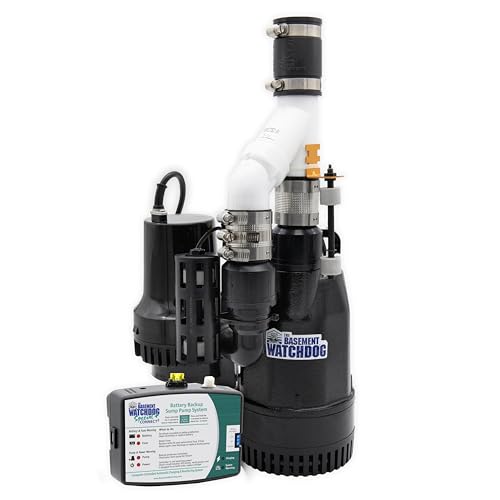
The Basement Watchdog Big Combo CONNECT combines a ½ HP PSC primary pump with a WiFi-enabled battery backup system. The primary pump delivers up to 3,540 GPH at a 10 ft lift and 4,400 GPH at zero lift, while the backup can handle 1,850 GPH at 10 ft and 2,600 GPH at zero lift. The WiFi-capable back-up unit provides continuous monitoring of pump status, power, and battery health, with alarms and guidance for maintenance. This setup is suitable for homes needing remote alerts and a robust primary/back-up pairing.
Wayne WSS30VN Sump Pump System

Wayne’s 1/2 HP sump pump with an integrated vertical float switch is designed for indoor use and includes a battery backup option. It can pump up to 5,100 GPH, with the ability to evacuate up to 10,000 gallons on a single battery charge. A preassembled design aims for quick, tool-free installation in about 15 minutes, and it fits most 16-inch diameter or larger sump basins. The battery backup requires the Wayne WSB1275 75 Ah battery (not included).
Viopumpo 2500W Sump Pump Backup System

This system uses a pure sine wave 2500W backup output for reliable operation during power outages. It features a built-in 25A charger for fast or trickle charging, supports deep-cycle lithium and AGM batteries, and includes an LCD remote to monitor voltage, power, and battery status. Built-in protections guard against overheating, short circuits, and overcharges to extend battery life and ensure safe operation for diverse pump loads.
The Basement Watchdog Combo (CITE-33)

The CITE-33 combo is a preassembled, preplumbed system featuring a 1/3 HP PSC primary pump. It delivers 3,100 GPH at a 10 ft lift and up to 3,720 GPH at zero lift. It integrates a battery backup with monitoring to help homeowners anticipate issues before they become problems, simplifying installation while providing a reliable second line of defense against basement flooding during outages or heavy rains.
The Basement Watchdog AGM Battery (BW-27AGM)

This AGM standby battery is maintenance-free, eliminating the need to add fluid or distilled water. It provides extended protection times—up to 40 hours for certain Watchdog configurations and up to 48 hours for others—depending on duty cycles. It is designed to work with compatible Basement Watchdog backup systems, offering a reliable, low-maintenance power source for critical sump pump backups.
The Basement Watchdog Special CONNECT BWSP

The BWSP is a battery backup sump pump system with a monitoring module. It runs up to 2,600 GPH at zero lift, with 2,500 GPH at 0 ft and 1,730 GPH at 10 ft of lift. Its user-friendly control panel lights guide maintenance steps, while a sensor monitors fluid levels for additional peace of mind during operation and battery health checks.
The Basement Watchdog Emergency Backup Sump Pump (BWE)

The BWE backup unit pumps up to 2,000 GPH at the surface and 1,000 GPH at a deeper lift. It includes a 24/7 monitoring controller that provides visual and audible alarms and explains steps for maintenance. The dual float switch configuration offers enhanced protection in case of pump failure, power loss, or sensor malfunctions, delivering continuous basement protection during emergencies.
Buying Guide: Key Purchase Considerations
When selecting a basement sump pump backup system, consider these factors to match your home’s needs:
- Power source: Decide between battery backup, water-powered, or combination systems. Battery backups continue during outages, while water-powered options rely on municipal water pressure.
- Primary pump capacity: Look for a primary pump with high GPH ratings at your typical lift height to handle heavy storms.
- Backup capacity: Ensure the backup can maintain flow during outages long enough to protect valuables and living areas. Higher GPH at given lifts is better for flood-prone basements.
- Monitoring and alerts: WiFi or LCD displays help you track performance, battery health, and alert you to maintenance needs before a failure occurs.
- Installation complexity: Some models come preassembled and preplumbed for quick setup, reducing installation time and potential plumbing errors.
- Battery type and lifespan: AGM and deep-cycle batteries offer longer life with minimal maintenance. Check compatibility with the backup unit and expected runtime.
- Battery maintenance: Some options are maintenance-free, while others require periodic checks. Consider your willingness to perform routine checks.
- Noise and efficiency: Look for models with efficient motors and sealed housings to minimize noise in living spaces.
- Warranty and service: A longer warranty and responsive customer support add value, especially for critical home systems.
- Integration with smart home or alarms: If you value remote monitoring, prioritize systems with reliable mobile apps or integration with home security systems.
All selected products are designed to minimize downtime and offer multiple safeguards during power outages or surge events. For homes in flood-prone areas or with frequent storms, prioritizing a system with robust backup capacity and clear maintenance indicators helps ensure preparedness.