Finding the right standing aid can make daily routines safer and more comfortable. This guide reviews five top-rated chair and couch stand assists designed to help users rise with stability, control, and minimal strain. Each option supports different furniture types and mobility needs, offering adjustable height, sturdy frames, and ergonomic grips. Read on to compare features and determine which stand assist best fits your home setup and daily routine.
| Product | Brand | Capacity | Notes |
|---|---|---|---|
| Vive Stand Assist | Vive | 300 lbs | Dual handles, easy installation under cushions |
| Sangohe Mobility Standing Aid Rail | Sangohe | 300 lbs | Enlarged base for extra stability |
| Support Way Stand Assist for Chair & Couch | Support Way | 450 lbs | Height adjustable; versatile for furniture |
| NIMOOD L1 Stand Assist | NIMOOD | 300 lbs | Width-adjustable arms; padded handles |
| VOCIC Upgrade Sit To Stand Lift | VOCIC | 300 lbs | One-step seat rotation; compact transport |
Vive Stand Assist – Mobility Standing Aid Rail

The Vive Stand Assist provides safe, stable assistance for rising from chairs, sofas, and recliners. Its dual support handles create a solid foundation for pushing up into a standing position, reducing twisting and lowering fall risk. Installation is designed to fit around cushion bases, making it compatible with most cushioned seating, including plush sofas and upholstered chairs. The aluminum frame is durable and adjustable, supporting up to 300 pounds with a sleek, discreet black finish that blends with home decor.
Sangohe Mobility Standing Aid Rail for Couch
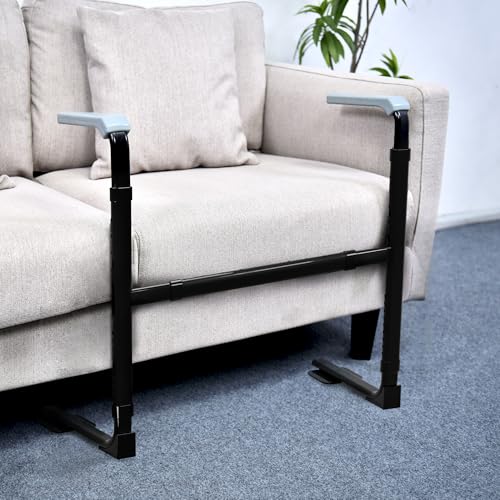
This universal-fit stand assist works with most couches and sofas, tucking securely under or around cushions. It features an upgraded, larger base for improved floor grip and balance when rising from a seated position. The frame is fully adjustable, with a heavy-duty aluminum build rated to support up to 300 pounds. Height and width adjustments tailor the setup to different furniture styles, helping users achieve a stable transfer every time.
Support Way Stand Assist for Chair & Couch

This model emphasizes multifunctional support for sit-to-stand tasks. Its curved handle and wide anti-slip base provide leverage and stability, reducing knee and back strain. Constructed from durable aerospace aluminum, the stand assist balances strength with light weight. The height range (29.5 to 39 inches) accommodates various furniture heights, and the design is suitable for low couches or elevated surfaces, ensuring a secure foothold for safe standing transitions.
NIMOOD L1 Stand Assist for Couch
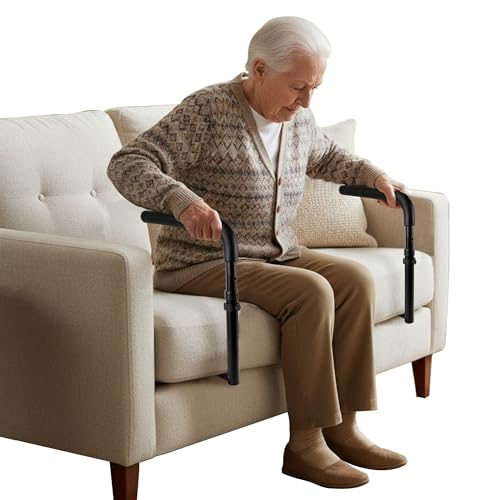
The NIMOOD L1 Stand Assist offers adjustable width and height to fit a range of sofas and chairs. Its dual ergonomic handles provide a secure base for rising without twisting, helping to minimize fall risk. The frame uses aircraft-grade aluminum and stainless steel, supporting up to 300 pounds. A flat-tube base hugs furniture to prevent slips, while lightly padded grips ensure comfortable leverage during standing transfers.
VOCIC Upgrade Sit To Stand Lift

The VOCIC sit-to-stand lift emphasizes one-step seat rotation and streamlined navigation through standard doorways. A padded knee and seat supports, plus foam-wrapped handles, provide ergonomic comfort for both patient and caregiver. Capable of lifting up to 300 pounds, its reinforced steel frame and upgraded wheel-locking system ensure stability during transfers, making it suitable for home care or clinical settings where reliable support is essential.
Buying Guide
Key purchase considerations include capacity, compatibility with your furniture, and adjustability. A higher weight rating provides more versatility, but ensure the stand assist fits your furniture’s dimensions and cushion design. Look for a low-profile base that won’t snag or slip on carpet and a handle design that minimizes wrist strain.
Additional perspectives to consider:
- Stability vs. portability: Some models prioritize a wide base for stability, while others emphasize lightweight frames for easy relocation around the home.
- Ease of installation: Consider how the device integrates with your existing seating. Cushioned sofas may require different placements than upholstered chairs or recliners.
- Ergonomics and grip: Padded, textured, or contoured handles can reduce hand fatigue and improve leverage during the sit-to-stand transition.
- Maintenance and durability: Aluminum frames resist corrosion and are generally lighter, but ensure joints and locking mechanisms remain secure over time.
- Caregiver considerations: If a helper or clinician will assist, choose a model with straightforward adjustments and clear safety features to minimize strain during transfers.
When selecting a stand assist, compare entry and exit angles, required space around the seating, and how naturally the device integrates with your daily routine. By evaluating these factors against each product’s features and capacity, you can identify the best option to support independent mobility while preserving safety in the home.