Termite control at home requires reliable products, clear instructions, and a plan that fits your infestation level. The following five options cover barriers, baits, dusts, and liquid concentrates to help protect your property. This guide highlights what each product does, how to apply it safely, and what to expect in terms of residual control and coverage.
Summary of Selected Products
| Product | Brand | Key Benefit |
|---|---|---|
| Harris Carpenter Ant Killer & Termite Control Treatment, 128 Oz | HARRIS | Contact kill for carpenter ants and termites; up to 1 month protection; ready-to-use spray with trigger |
| BASF Trelona Compressed Termite Bait (6 Cartridges) | BASF | Termite bait with novaluron IGR; ingested by workers and colonies for control |
| Cyper TC Termite-1 Gallon | Control Solutions | Liquid concentrate with cypermethrin; creates soil barrier and residual control |
| Control Solutions D-Fense Dust – 1 lb | Control Solutions | Residual, low-odor dust for cracks and voids; broad-spectrum indoor use |
| Control Solutions Cyper WSP Insecticide – 1 lb | Control Solutions | Water-soluble powder; odorless with long-lasting residual protection |
Note: This article focuses on consumer-available products suitable for do-it-yourself termite control. Always follow label directions and local regulations when applying any pesticide.
Harris Carpenter Ant Killer & Termite Treatment

HARRIS offers a ready-to-use formula designed to kill carpenter ants and termites on contact. The product claims long-lasting protection, providing up to a month of continued defense after initial application. The included trigger sprayer supports precise targeting in active areas, such as baseboards, entryways, and crawl spaces. This option is suitable for spot treatments and targeted barriers around structural wood or known nests. When used as directed, it can help reduce visible activity and deter recolonization in treated zones.
BASF Trelona Compressed Termite Bait

This termite bait system uses a Novaluron-based IGR to disrupt feeding and grooming, effectively targeting subterranean termite colonies. The six-cartridge setup is designed for multiple bait stations around a structure, which encourages workers to transfer the active ingredient throughout the nest. Baits require proper station placement and monitoring to evaluate colony activity. This option is best for homeowners seeking a preventative, systemic approach rather than surface treatments alone.
Cyper TC Termite-1 Gallon

Cyper TC is a liquid concentrate containing 25.3% Cypermethrin. It is designed to create a sturdy soil bond and form a protective barrier against subterranean termites. The product’s use is oriented toward exterior perimeter treatment and under-slab application, depending on local guidelines. Notable considerations include potential restrictions on shipping to certain states and the need for careful mixing and application to avoid runoff and overspray. It provides a durable barrier when used as part of a broader integrated approach.
Control Solutions D-Fense Dust
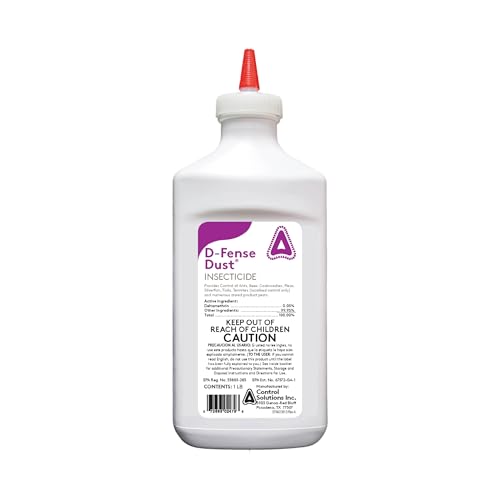
D-Fense Dust is a non-staining, odorless residual insecticide with Deltamethrin as the active ingredient. Its fine-dusting formulation is suitable for cracks, crevices, wall voids, and other hard-to-reach areas where termites or other pests may hide. Residual control can extend for months if undisturbed, making it a practical option for interior applications and for treating typically neglected spaces in basements and crawl spaces. Follow label directions to minimize exposure to occupants and pets.
Cyper WSP Insecticide – 1 lb

Cyper WSP is a water-soluble insecticide powder with the same base ingredients as a well-known brand but at a lower price point. It offers up to 90 days of residual protection and is described as virtually odorless. The product makes up to 40 gallons, enabling substantial coverage for typical home applications, including interior and exterior spaces where termite activity is suspected. It is suitable for professionals and DIYers who prefer a solvent-free, easy-to-mix formulation for large-area treatment.
Buying Guide: Key Purchase Considerations
Choosing the right termite control product depends on your home’s layout, infestation level, and maintenance goals. Consider the following factors to compare options more effectively:
- Active ingredient and mode of action: Liquid concentrates, baits, dusts, and IGRs work differently. For surface barriers, liquids like Cypermethrin concentrates may be ideal; for colony-wide impact, baits using Novaluron can disrupt termite life cycles; dusts are best for voids and crevices.
- Coverage area and application scope: Bait systems require monitoring and station placement but target colonies; liquids and dusts can offer immediate control and perimeter protection. Assess your home’s square footage and access points.
- Residual duration: Some products provide months of residual activity if left undisturbed, while others require reapplication after rain, cleaning, or remodeling. Balance convenience with ongoing maintenance needs.
- Safety and occupancy considerations: Odorless and non-staining formulas reduce indoor disruption but follow all label safety precautions. If you have pets or children, prioritize low-odor options and consider professional consultation for large infestations.
- State and local restrictions: Certain active ingredients or products may have regional limitations. Verify shipping and usage regulations before purchase and application.
- Intended use and environment: Exterior perimeter treatments, interior void applications, and soil barriers each serve different roles. For best results, integrate products in a multi-step plan that includes inspection and monitoring.
When implementing a do-it-yourself termite control plan, document treated areas, track observed activity, and schedule follow-up inspections. If signs of extensive damage or active infestation persist, consider contacting a licensed pest professional for a personalized assessment and integrated treatment strategy.