Choosing the right drop ceiling insulation can dramatically improve sound control, thermal performance, and overall comfort in commercial and residential spaces. This guide highlights five top options designed for use with drop ceilings, focusing on sound absorption, radiant barriers, moisture resistance, and easy installation. Each product is evaluated for acoustic impact, installation practicality, and durability to help you compare effective solutions.
| Product | Brand | Key Benefit | Primary Use |
|---|---|---|---|
| Soundsulate Sound Absorbing Acoustical Drop Ceiling Tiles | Soundsulate | Superior sound absorption, reduces reverb | Ceiling tiles for acoustics |
| SmartSHIELD -5mm Reflective Foam Core Insulation Roll | INSULATION MARKETPLACE | Radiant barrier with R15 insulation | Radiant and thermal protection |
| SmartSHIELD -3mm 48inx10ft Reflective Roll | INSULATION MARKETPLACE | 95% radiant energy reflection with vapor barrier | Thermal and moisture barrier |
| Soundsulate Next Generation 1 lb MLV | Soundsulate | High-efficiency sound blocking (STC 27) | Wall/ceiling soundproofing |
| USEP 5mm R8 Reflective Foam Core | Trade Winds | Double-sided foil, radiant barrier | Ceiling/wall insulation |
These selections balance acoustic performance, radiant protection, moisture resistance, and installation practicality for American homes and offices using drop ceilings.
Soundsulate Acoustical Ceiling Tiles for Quiet Spaces

Soundsulate Sound Absorbing Acoustical Drop Ceiling Tiles provide enhanced sound control by reducing reverberation and echo. The tiles are made from lightweight fiberglass with a rigid facing, delivering effective noise reduction for speech intelligibility and overall ambient noise suppression. A 20-tile pack covers approximately 80 square feet, making it a practical choice for mid-sized ceiling jobs or retrofit projects where sound control is a priority. The product’s construction supports durability in typical ceiling environments while remaining easy to install in standard drop-ceiling grids.
SmartSHIELD -5mm Reflective Foam Core Insulation Roll

This 5mm thick roll combines radiant barrier properties with an R15 level of insulation. It serves as an all-in-one solution—offering insulation, vapor barrier, radiative protection, and a clean white surface that requires no painting. Its high reflectivity helps minimize heat gain or loss, which can reduce cooling and heating loads in spaces with drop ceilings. The product is designed for straightforward installation, with a rigid yet flexible structure that adapts to various ceiling configurations while maintaining performance under indoor conditions.
SmartSHIELD -3mm Reflective Roll for a Thin Radiant Barrier
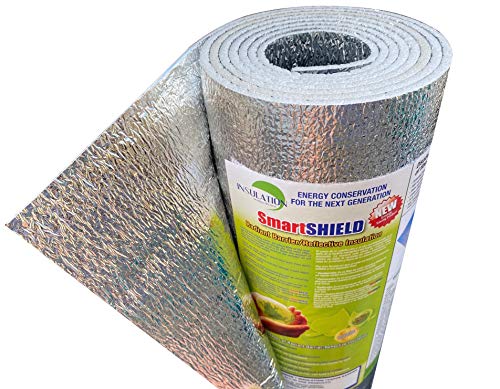
The 3mm foam-core reflective insulation roll provides a durable radiant barrier with a closed-cell polyethylene foam core sandwiched between highly reflective engineered foil on both sides. It’s designed to resist humidity and moisture, making it suitable for indoor and outdoor installations. Easy to cut and install, this option combines lightweight construction with strong thermal performance, helping to control radiant heat transfer and contribute to more stable interior temperatures in spaces utilizing a drop ceiling.
Soundsulate Mass Loaded Vinyl (MLV) Soundproofing Barrier

Soundsulate MLV adds a robust layer of sound blocking for ceilings, walls, and other assemblies. The 1 lb per square foot density provides a proven barrier against airborne noise, with dimensions of 4 feet by 25 feet per roll (100 square feet). The material’s durability and thickness make it effective for reducing speech, music, street noise, and engine sounds permeating through ceilings. It’s suitable for home theaters, multi-family units, and office spaces where higher STC performance is desired without compromising ceiling aesthetics.
USEP 5mm R8 Reflective Foam Core Insulation
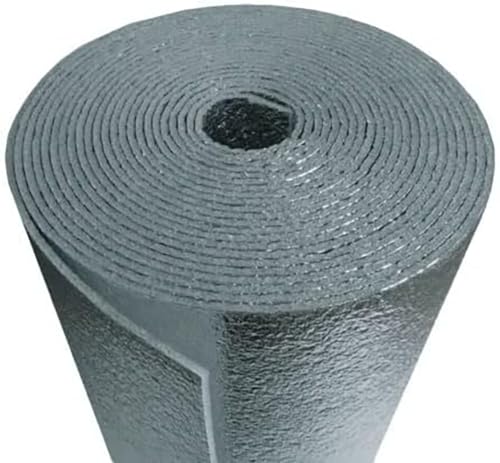
USEP’s 5mm thick reflective insulation features a double-sided aluminum foil radiant barrier and a closed-cell foam core. With an R8 rating and the ability to block radiant heat by up to 99.7%, this option provides effective thermal management for ceilings, walls, and roofing systems. Its foil construction offers moisture resistance, making it suitable for damp or humid environments. The product’s dual-sided design also helps reflect heat away from indoor spaces while maintaining a lightweight and easy-to-install profile for ceiling renovations.
Buying Guide: Key Purchase Considerations for Drop Ceiling Insulation
- Acoustic goals: If reducing echo and improving speech intelligibility is the priority, prioritize sound-absorbing tiles or mass-loaded vinyl barriers. For rooms that require deeper sound isolation from adjacent spaces, combine MLV with acoustic tiles for layered performance.
- Thermal performance: For radiant heat protection, radiant barriers and foil-faced insulations offer substantial gains. Consider R-values and the level of heat transfer reduction you need based on climate and indoor comfort targets.
- Moisture resistance: In humid or damp environments, select moisture-resistant materials or vapor barriers to prevent humidity-related degradation and mold growth.
- Installation practicality: Many options are designed for simple drop-ceiling integration, with cut-to-fit foams and foil-core products. Consider whether you need pre-cut sizes, adhesive options, or compatibility with existing ceiling grids.
- Durability and compatibility: Lighter foams are easy to install but may require protective facings in high-traffic areas. Heavier MLV provides strong sound attenuation but requires careful handling during installation.
- Aesthetics and maintenance: Some products offer clean white surfaces or minimal finishing requirements. Consider whether paintability or finish is important for your space’s look and upkeep.
- Cost and coverage: Compare coverage per roll or tile, and compute approximate area coverage to estimate total material needs. Factor in waste from cuts and irregular ceiling dimensions.
- Code compliance and safety: Verify that insulation materials meet local fire resistance and building code requirements for ceilings and radiant barriers in your region.