Gas infrared heaters offer efficient warmth for homes, garages, and workshops without relying on electric heating. This guide highlights five strong options suitable for residential use, focusing on radiant heat, reliability, and ease of installation. Each model below is evaluated on BTU output, heat area, control options, and practicality for wall or floor mounting. Compare features to choose a heater that fits your space and climate.
| Product | BTU | Fuel | Notes |
|---|---|---|---|
| ProCom MN300TPA-B | 30,000 | Natural Gas | Wall or floor mounting; thermostat control; compact plaque heater |
| ProCom MN100TPA-B | 10,000 | Natural Gas | Smaller space heater; thermostat control; slim profile |
| SunStar 80,000 BTU Infrared Ceramic | 80,000 | Natural Gas | Aluminized steel; corrosion resistant; adjustable angle |
| Comfort Glow 30,000 BTU Indoor Infrared | 30,000 | Natural Gas | Vent-free; thermostat included; off-grid capable |
| Mr. Heater 30,000 BTU Vent Free Dual Fuel | 30,000 | Natural Gas / LP | Dual fuel; battery spark ignition; heats up to 1,000 sq ft |
ProCom MN300TPA-B 30,000 BTU Natural Gas Plaque Heater

The MN300TPA-B is a compact natural gas infrared plaque heater designed for residential spaces up to 1,400 sq. ft. It offers thermostat-controlled High/Medium/Low heat and can be mounted on a wall or placed on the floor with included base feet. Its slim, modern profile fits out-of-the-way spots while delivering steady radiant warmth, ideal for living rooms, offices, or bedrooms.
ProCom MN100TPA-B 10,000 BTU Natural Gas Plaque Heater

This 10,000 BTU model heats up to 500 sq. ft. and shares ProCom’s minimalist design with thermostat control offering High/Medium/Low settings. It is suited for smaller living spaces or bedrooms, with wall mounting hardware included and base feet for floor placement. The unit emphasizes efficient infrared warmth and a clean, compact footprint.
SunStar Infrared Ceramic Heater – 80,000 BTU

SunStar’s 80,000 BTU infrared ceramic heater emphasizes corrosion resistance with aluminized steel construction and aluminum reflectors to maximize radiant efficiency. The unit supports horizontal angle mounting up to 30 degrees, making it adaptable for workshops or larger living spaces where directional heat is beneficial. This model targets higher heat output for more substantial areas.
SunStar Infrared Ceramic Heater – 120,000 BTU

The 120,000 BTU model from SunStar is designed for large spaces requiring substantial radiant heat. Constructed from aluminized steel for durability, it uses aluminum reflectors to boost radiant efficiency and supports angled mounting up to 30 degrees. It’s well suited for workshops, industrial-adjacent garages, or larger living configurations where electric resistance is impractical.
Comfort Glow 30,000 BTU Indoor Infrared Heater

Comfort Glow’s 30,000 BTU indoor infrared heater provides radiant warmth for spaces up to 1,250 sq. ft. It operates as a natural gas heater without requiring electricity, offering reliability during outages. The unit ships for wall mounting with additional options for floor mounting to increase portability. Its efficiency and independence from power are key advantages for many homes and small offices.
Mr. Heater 30,000 BTU Vent Free Dual Fuel
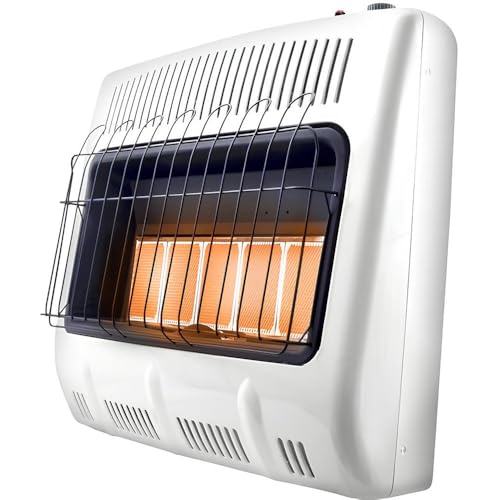
This vent-free dual-fuel model delivers 30,000 BTU per hour and heats up to 1,000 sq. ft. It runs on natural gas or propane, providing flexibility for fuel choice. A battery-operated electronic ignition adds ease of use, especially in spaces where electrical access is limited. The unit is suited for well-ventilated areas and garages seeking reliable radiant warmth.
Buying Guide: Key Purchase Considerations
Heat Output and Space Coverage
Match BTU ratings to the size of the space you want to heat. Larger rooms may benefit from higher BTUs (e.g., 80,000–120,000) while smaller bedrooms can be adequately warmed by 10,000–30,000 BTU models. Consider ceiling height and insulation quality to estimate real-world effectiveness.
Fuel Type and Availability
Natural gas provides steady, long-term cost effectiveness where gas lines exist. Dual-fuel units offer flexibility if LP is more accessible in some areas. Assess the reliability of your gas supply and potential maintenance needs.
Vent-Free vs Vent-Free with Venting Options
Vent-free designs simplify installation and reduce ducting requirements but rely on adequate room ventilation to prevent moisture buildup. Some models offer vented or hybrid configurations for specific spaces and local codes. Always check local regulations before installation.
Installation and Mounting
Choose between wall-mounted units and floor-stand options. Wall mounting saves floor space, while floor feet can provide mobility or easier access for adjustments. Ensure a safe clearance from furniture, curtains, and overhead fixtures as recommended by the manufacturer.
Controls and Efficiency
Thermostat-controlled models simplify temperature management and can improve energy efficiency. Look for off-grid capabilities in models that don’t require electricity, and confirm compatibility with your existing thermostat system if you plan to integrate it.
Durability and Maintenance
Steel and aluminized components offer durability in harsh environments. Inspect reflectors and heat exchangers for corrosion resistance, and follow maintenance guidelines to sustain performance and longevity over time.
When selecting an infrared gas heater for residential use, prioritize models with clear installation instructions, reliable ignition systems, and robust safety features. By evaluating BTU, space requirements, and fuel options, you can identify a heater that delivers consistent warmth, comfort, and energy efficiency across common American living spaces.