When selecting an inline water heater for your aquarium, reliability, safety features, and compatibility with tank size are key. This guide highlights five efficient inline and submersible heaters that pair well with American home aquariums, spanning a range of tank capacities and setups. Each product section includes user-friendly features, durability notes, and practical considerations to help you choose the right heater for steady, stable water temperatures.
| Product | |||
|---|---|---|---|
| Aquael Inline Flow Heater (300 Watt) | Aquael | 25 to 160 US gallons | External mounting for a clean display |
| hygger 50W Mini Inline Quartz Glass Heater | hygger | 5-15 gallons | Compact, easy to hide; built-in thermometer |
| NICREW 100W Aquarium Heater | NICREW | 10-20 gallons | External controller with dual sensors |
| HiTauing 300W Submersible Heater | HiTauing | 40-75 gallons | Intelligent leaving-water protection |
| hygger 300W/500W/800W/1000W Aquarium Heater | hygger | 40-80 gallons (300W model) | Digital LED controller with alarms |
Aquael Inline Flow Heater (300 Watt)

The Aquael 300W Inline Flow Heater is designed for aquariums ranging from 25 to 160 gallons, offering robust heat output for medium to large setups. Its external mounting design keeps heating elements outside the display, preserving the tank’s aesthetics while simplifying maintenance. A high-efficiency heating element enables rapid heating and stable temperature control, which is crucial for sensitive fish and coral environments. The external configuration reduces the likelihood of accidental damage and helps maintain a clean interior appearance. This model is well-suited for enthusiasts seeking a durable, high-capacity inline heater that minimizes visible hardware in the tank.
Considerations include ensuring proper flow through the filter system to maintain even heat distribution and verifying compatibility with your canister or sump setup. Regular inspection of seals and fittings will help prevent leaks. For larger tanks or demanding species, pairing this heater with a reliable digital thermometer or controller can enhance temperature stability during seasonal swings or power interruptions.
hygger 50W Mini Inline Quartz Glass Heater

The hygger 50W Mini Inline Heater is a compact option designed for small tanks, typically 5-15 gallons. Its inline quartz glass construction offers durability and clear heat transfer, with an external controller allowing for easy temperature management without submerging control components. The built-in thermometer helps maintain accurate readings, and the compact form makes it straightforward to hide within the filtration pathway or cabinet. This heater is ideal for nano tanks or betta setups where space is at a premium but reliable temperature control is still essential.
Practical notes include ensuring the heater is appropriately sized for your tank to avoid under-heating or overheating. The external controller reduces water contact with electronics, but ensure the power cord length accommodates your setup. As with all inline units, verify the flow rate through your filter to prevent hot spots and verify that the heater is fully submerged where required by the model’s design, for safety and efficiency.
NICREW 100W Aquarium Heater

The NICREW 100W heater is designed for 10-20 gallon tanks and includes an external controller with dual temperature sensors for precise readings. Features such as overheat protection add safety, automatically halting heating if the water exceeds the preset limit. The external control interface allows easy, dry-touch adjustments, which is helpful for novice keepers concerned about wet hands while tuning temperature in a busy tank setup. The dual sensors enhance accuracy, supporting stable conditions for a variety of freshwater and lightly brackish environments.
When integrating this heater, consider placing the unit to ensure the sensor is fully submerged for accurate readings and that the external controller remains dry and accessible. Regular calibration checks help maintain consistent temperatures, particularly in rooms with fluctuating ambient temperatures or during heat waves. Pairing with a reliable thermometer can provide an extra layer of measurement confidence for sensitive species.
HiTauing 300W Submersible Heater
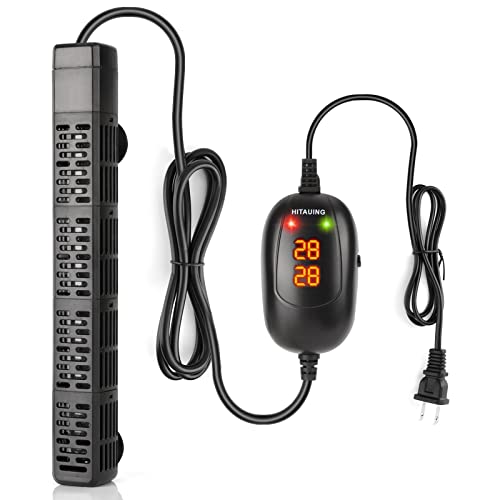
This 300W HiTauing model is intended for 40-75 gallon tanks and features explosion-proof quartz glass and a nickel-chromium heating element for rapid, stable heat transfer. It includes an intelligent water-sensor system that stops heating when the head is out of water or when the set temperature is reached, with a green indicator to confirm safe operation. The extended cord and robust housing help it blend into larger aquariums while maintaining reliability in freshwater or saltwater setups. The dual-temperature control system supports Fahrenheit and Celsius, making it user-friendly for a broad audience.
Key implementation notes include ensuring the heater is fully submerged where required and using the sensor to monitor true water temperature rather than relying on ambient room heat. The safety features reduce the risk of overheating and damage to aquatic life, making it suitable for hobbyists who value proactive protection against heater failures. Regular inspection of the quartz tube and connections is recommended for longevity in busy tanks with filters and power heads.
hygger Aquarium Heater 300W/500W/800W/1000W

The hygger 300W variant is suitable for 40-80 gallon aquariums and features a digital LED controller with an automatic leaving-water protection system. The unit includes multiple safety features: an auto shut-off for high temperature and low water levels, an audible alarm, and a clear LED readout for temperature. The controller is mountable on the tank edge, allowing easy external adjustment without immersion in water. This makes it a strong option for larger or more intricate setups where precise control is essential and visibility of the heater is minimized.
For best results, ensure compatibility with your tank dimensions and filtration flow to prevent uneven heating. The alarm and auto-shutoff provide proactive alerts about potential issues, but routine checks of sensor function and calibration help maintain accuracy. This heater model supports flexible configurations across a range of tank sizes, enabling hobbyists to scale up as their aquascaping or bioload grows.
Buying Guide: Key Purchase Considerations And Comparisons
- Tank size and heater wattage: Match heater capacity to tank volume, allowing headroom for temperature fluctuations. Oversized heaters can overshoot, while undersized units may struggle to reach target temps.
- Inline vs. submersible design: Inline heaters stay outside the display and rely on flow through the filter, which preserves aesthetics. Submersible heaters can be simpler to install but require careful placement and regular safety checks.
- External controllers and sensors: External controllers with dual sensors provide more accurate readings and easier adjustments, especially for beginners. Look for units with automatic shutoff and overheating protection.
- Safety features: Overheat protection, leaving-water sensors, and explosion-proof glass help ensure safety for both occupants and aquatic life, particularly in larger or multi-species tanks.
- Maintenance and durability: Quartz glass elements offer durability, while external housings reduce saturated areas that accumulate debris. Regular inspection of seals, cords, and mounting hardware extends product life.
- Ease of installation: Consider flow path compatibility with existing filters or sump return lines. Inline units require proper plumbing and may benefit from professional installation in complex systems.
- Accuracy and readability: A digital LED controller and clear temperature readouts simplify ongoing adjustments and monitoring, reducing the risk of temperature swings affecting sensitive species.
- Budget and availability: While prices vary, investing in robust safety features and a reputable brand can reduce long-term maintenance costs and replacements.
Overall, the best inline heater choice depends on tank size, desired level of control, and how much display space you want to preserve. Inline models excel in larger setups with clear display aesthetics, while reliable submersible units with external controllers offer precise management for moderate to small tanks. A combination of a well-sized heater and an accurate thermometer—preferably digital—will help maintain a stable environment for your freshwater or lightly brackish aquatic life.