Finding energy efficient grow lights helps you save on electricity while delivering high-quality light for healthy indoor plants. This guide highlights five top-performing options, focusing on full-spectrum output, long lifespan, and smart features that reduce waste. Each product section links to the official Amazon listing for quick comparison. The included buying guide covers important considerations to help you choose the right light for your space and plant goals.
| Product | Brand | Key Benefit |
|---|---|---|
| SANSI Grow Lights for Indoor Plants Full Spectrum, 36W | SANSI | High PPFD with secondary optical design |
| GooingTop LED Grow Light, 6000K | GooingTop | 5-level dimmable with timer, USB/AC power |
| Hlite 16 Inch 4 Pack LED Grow Lights | Hlite | Four pack, linkable, plug-and-play |
| LBW Plant Grow Light, 72 LEDs | LBW | Adjustable height with long cord and timer |
| Aokrean Plant Grow Light, 48 LEDs | Aokrean | Three spectrum options and timer |
SANSI Grow Lights for Indoor Plants Full Spectrum

The 36W light uses a 4000K daylight spectrum that mimics natural sunlight, spanning 400nm-780nm for a full life cycle of plant growth. It aims to deliver a high color rendering index close to natural light to boost crop quality. A secondary optical design yields PPF around 65.6 μmol/s and a PPFD of approximately 265.58 μmol/s per square meter at 1 foot, improving light utilization. The ceramic heat sink and patented COP/C0C technology support faster heat conduction and longer bulb life, around 25,000 hours.
GooingTop LED Grow Light, 6000K Full Spectrum
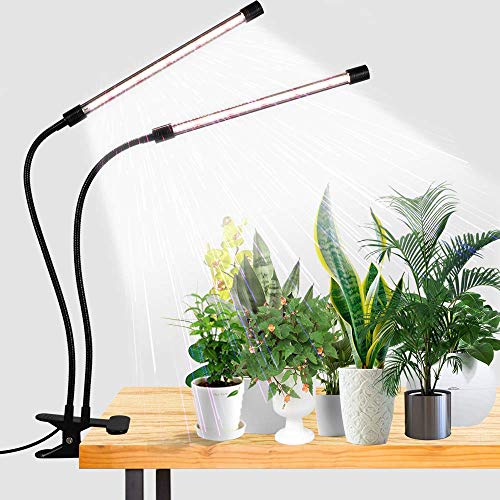
This clip-style lamp combines 10 red and 74 white LEDs to deliver a bright, sun-like noon spectrum. With a 6000K color temperature and a high color rendering index of up to 95, it provides a gentle, flicker-free light suitable for reading and plant growth. It includes a 4/8/12-hour timer and a flexible gooseneck with a strong clamp, making placement easy. USB or AC power options simplify use in small spaces or desks, promoting energy efficiency through tailored lighting cycles.
Hlite 16 Inch 4 Pack LED Grow Lights

Hlite offers a four-pack LED solution that is plug-and-play and linkable up to six units. The fixture consumes a small amount of wattage (around 20W per unit) yet delivers strong light energy, with more than 95% of emitted energy absorbed by plants. Its full-spectrum capabilities support seedling through flowering stages, making it a compact option for multi-plant setups in tight spaces.
Remote Control LED Grow Light, 100 Watt

This 100W grow light includes a remote for adjusting modes, brightness, and timers. It offers Veg, Bloom, and Veg & Bloom modes to suit different growth stages, enabling energy-efficient operation by matching light output to plant needs. The remote control minimizes the need for frequent adjustments, contributing to ongoing energy savings in a growing tent or compact garden setup.
Aokrean Plant Grow Light, 48 LEDs

Aokrean provides a modular, adjustable halo grow light supporting three spectrums: white, warm white, and red/mix lighting. It features timer modes (3/9/12 hours) and 10 brightness levels, offering flexibility for different plant species and growth stages. Note that the stand must be stabilized with a pot for proper use, and the design is intended for indoor plant lighting with an emphasis on energy-efficient operation through tailored light settings.
Buying Guide: Key Purchase Considerations
Light spectrum and intensity: For most houseplants, full-spectrum white light spanning 400-780 nm supports all growth stages. Look for high PPFD values at the target distance to ensure adequate light for leafy greens and flowering plants. Consider whether the fixture emphasizes red and blue wavelengths for photosynthesis, balanced with white daylight for natural appearance.
Energy consumption and efficiency: Compare watts consumed with PPFD output. Modern LED grow lights aim to maximize light per watt, using advanced optics, reflective hoods, and high-efficiency diodes. Clock functions and dimming features help tailor usage to plant needs, reducing wasted energy.
Coverage area and height: Assess whether the light is designed for single plants, clusters, or larger canopies. Adjustable stands, goosenecks, or telescoping poles help position the fixture to optimize light spread without excess energy use. Ensure you can achieve uniform coverage across the canopy.
Durability and heat management: Lights with ceramic heat sinks, robust housings, and good thermal design typically last longer and maintain efficiency longer. Look for long rated lifespans (tens of thousands of hours) and reliable connectors or mounting hardware.
Controls and automation: Timers, modes (Veg/Bloom), and remote control reduce manual adjustments and ensure lights run only when needed. USB-powered options can simplify smaller setups, while AC-powered units may be preferable for consistent operation.
Installment considerations: Some products are plug-and-play, while others require assembly or mounting hardware. Check whether the unit is adjustable in height or angle to adapt to plant growth and space constraints.
Budget and scalability: Start with a light appropriate for your current space, but consider future expansion. Linkable fixtures or multi-pack options can reduce per-unit costs when scaling a growing area.