For off-grid living, reliable hot water is essential. The following picks are compact, propane-powered, and designed for remote settings like cabins, campsites, RV parks, or tiny homes. This guide highlights five top options, focusing on ease of installation, safety features, and steady performance in low-water-pressure environments. Each product is evaluated for off-grid readiness, including portability, ignition systems, and safety protections.
| Product | Brand | Water Rate | BTU | Off-Grid Suitability |
|---|---|---|---|---|
| GASLAND Outdoors 16L | GASLAND | 4.22 GPM | 11,000 BTU | Excellent; USB ignition, propane-ready |
| GASLAND BE158 | GASLAND | 1.58 GPM | 41,000 BTU | Very strong BTU; CSA certified |
| Hike Crew Portable | Hike Crew | NA (systems combo) | NA | Integrated battery and adapters; portable shower |
| CAMPLUX BD158P43 | CAMPLUX ENJOY OUTDOOR LIFE | 1.58 GPM | 41,000 BTU | Includes pump kit; easy install |
| GASLAND BE158S | GASLAND | 1.58 GPM | 41,000 BTU | Digital display; multi-protection |
GASLAND Outdoors 16L Propane Tankless Water Heater

The GASLAND 16L tankless unit delivers up to 4.22 GPM, with a 16-liter capacity and on-demand hot water. It can raise water temperature by up to 109.4°F (43°C) at peak operation, starting reliably at low pressure with as little as 4.0 PSI. A standard 20-pound propane tank powers the system, and an electronic ignition runs off two D-cell batteries. This model suits off-grid scenarios such as camping, RVing, tiny homes, cabins, or garage spaces where a compact burner and quick heat are valued. Safety includes overheat, low-flow, dry-burn, anti-freeze, high-pressure, and flame failure protections.
Key features include adjustable temperature control, robust protection systems, and CSA-certified safety standards. The compact design minimizes installation footprint, while the electronic ignition simplifies ignition without matches. The unit is versatile for outdoor kitchens, poolside tasks, or vehicle cleaning. For off-grid enthusiasts who need consistent hot water without electrical dependence, this GASLAND option offers a well-rounded balance of performance and safety.
GASLAND BE158 Propane Tankless Water Heater

This GASLAND BE158 delivers about 1.58 GPM at up to 41,000 BTU for rapid hot water in off-grid environments. The highest rise reaches around 109.4°F (43°C), while the lowest rise sits near 55.4°F (13°C). It starts with low water pressure, requiring roughly 3.6 PSI to activate, and runs on a standard 20-lb propane cylinder with an electronic ignition. CSA-certified safety ensures compliance with Canadian and US standards, including overheating, low-flow, dry-combustion, anti-freeze, high-pressure, and flame-failure protections. This unit is well-suited for camping, RVing, outdoor showers, and remote cabins where space is at a premium.
With a compact footprint and reliable ignition, BE158 is favored for small off-grid setups. While its flow is lower than larger units, it provides dependable hot water for one or two users at a time. Its robust safety package makes it a practical choice when safety and simplicity are paramount, particularly in remote locations without ready access to water or electrical infrastructure.
Hike Crew Portable Propane Water Heater & Shower Pump
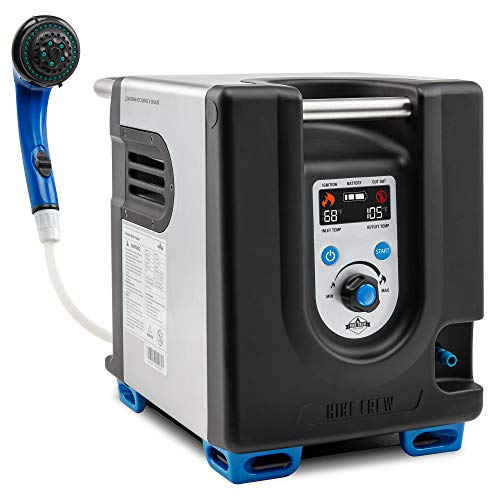
The Hike Crew system combines a portable propane water heater with a built-in shower pump and battery, designed for off-grid outdoor cleaning and bathing. It includes a shower head, pump hose, gas regulator, and a carry case. It operates with a set of AC/DC adapters and a built-in battery, enabling up to about 50 minutes of continuous operation. This 2-in-1 setup is ideal for remote camping, hiking, hunting, or off-grid cabins where a fully self-contained heating and pumping solution enhances comfort without heavy electrical reliance.
Users benefit from adjustable shower head settings and straightforward temperature control, enabling quick showers after outdoor activities. The integrated battery reduces the need for a constant power source, while the included accessories support versatile mounting and placement. However, it may require careful setup in very cold climates, and the overall water flow depends on pump performance and propane supply. Still, for mobility and self-sufficiency, this system provides a practical off-grid option.
CAMPLUX 1.58 GPM Portable Tankless Water Heater With Pump Kit

The CAMPLUX BD158P43 offers 1.58 GPM at 41,000 BTU, with a temperature rise up to 122°F depending on conditions. The system includes a 1.2 GPM pump, hoses, and SAE connections, enabling a practical on-demand shower experience in outdoor settings. It features LED display and adjustable gas and water flow knobs for camping flexibility, and the pump kit expands the usable pressure range from roughly 20 to 110 PSI. This model is well-suited for remote showers, RV campsites, and outdoor cleaning tasks where a compact, all-in-one solution is preferred.
Installation is straightforward for outdoor use, with attention to gas connections and venting requirements. The unit’s portability makes it appealing for hikers, campers, and small off-grid cabins. The included pump and hoses reduce the need for additional accessories, contributing to a smoother setup process. In terms of safety, verify proper venting and connection integrity to avoid gas leaks in camp environments.
GASLAND BE158S Tankless Water Heater – CSA Certified

The GASLAND BE158S is a CSA-certified propane tankless water heater offering 1.58 GPM at up to 41,000 BTU. It mirrors the BE158 design with a robust safety suite including overheating, low-flow, dry-combustion, anti-freeze, high-pressure protections, and flame failure devices. A digital display aids temperature control, and its compact build suits off-grid cabins, camping setups, and RVs that demand dependable hot water without electrical dependence. The device’s ignition remains battery-powered, making it suitable for remote locations where power access is limited.
As with other GASLAND models, this unit emphasizes safe operation and straightforward installation. The digital display helps users dial in precise temperatures, reducing the risk of scalding while ensuring energy-efficient operation. For off-grid families or travelers who require a compact, hot-water-on-demand solution with comprehensive protection, BE158S delivers a strong balance of capacity, safety, and portability.
Buying Guide: Key Purchase Considerations
- Performance vs. energy source: Off-grid systems rely on propane; evaluate BTU output in relation to your typical flow rate to ensure you meet hot-water demands without overheating or excessive pressure requirements.
- Water pressure and startup: Many models require low PSI to start. Check minimum water pressure and flow rate to avoid cold-water shocks and ensure reliable operation in remote spigots or RV lines.
- Safety protections: Look for features like overheating protection, low-flow protection, dry-fire protection, anti-freeze safeguards, high-pressure protection, and flame failure devices to reduce risk in unsupervised or remote locations.
- Portability and setup: For camping or cabin use, consider weight, size, and how easily you can mount or position the heater. Integrated pump kits or battery-powered ignition add convenience but may increase cost.
- CSA and safety certifications: CSA-certified models offer assurance for North American use, meeting standardized safety benchmarks across jurisdictions.
- Maintenance and replacement parts: Short-term reliability is important; verify parts availability (ignition components, seals, gaskets) and consumer support when you’re far from service centers.
- Cold-weather performance: In freezing environments, consider frost protection and appropriate venting to prevent condensate issues and ensure consistent operation in low temperatures.
When selecting among these options, map your off-grid scenario: number of users, typical shower duration, climate, and whether you prefer a compact single-device system or a more feature-rich setup with integrated pumps and batteries. For larger off-grid sites or multiple users, higher BTU units with more GPM may be preferred, while smaller, dispersed campsites may benefit from compact, highly portable models. Finally, always verify local installation codes and venting requirements to ensure safe and compliant operation in your off-grid environment.