Discover top-rated propane tank space heaters designed for portability, safety, and reliable warmth. This guide highlights five popular models, helping you compare BTU output, safety features, and convenience for patios, garages, campsites, and job sites.
Summary of selected products
| Product | Brand | BTU / Heating Style | Key Feature | Amazon Link |
|---|---|---|---|---|
| Original 540-Degree 45,000 BTU Tank Top Radiant Propane Heater | Mr. Heater | 45,000 BTU radiant, multi-directional | Direct mounting to 20 lb tank; tip-over safety | Yes |
| Propane Tank Top Heater, 30,000 BTU | Temctrl | 30,000 BTU (Low 22,000; Med 26,000; High 30,000) | 90° adjustable head; 3 heat levels; tip-off protection | Yes |
| Dura Heat TT-360 Tank Top Heater | Dura Heat | Up to 360° heating (built-in 360° design) | Tip-over shut-off; upright operation | Yes |
| Avenger FBDTP30 Infra-Red Tank Top Heater | Avenger | 30,000 BTU infrared | Front & rear guards; swivels 45° | Yes |
| BILT HARD 125,000 BTU Propane Torpedo Heater | BILT HARD | 75,000–125,000 BTU | Wide heating area; CSA listed | Yes |
Mr. Heater Original 540-Degree 45,000 BTU Tank Top Radiant Heater

The Mr. Heater unit attaches directly to a standard 20 lb propane tank, delivering up to 45,000 BTU of radiant heat. Its multi-directional design helps distribute warmth across outdoor spaces such as patios and garages. A built-in tip-over safety shut-off adds a layer of protection for unattended settings. The unit is portable and suitable for temporary heating in workshops, job sites, and outdoor events where robust warmth is needed.
Temctrl Propane Tank Heater Attachment, 30,000 BTU

This portable heater operates on a standard 20 lb tank and offers three heat levels: Low (22,000 BTU), Medium (26,000 BTU), and High (30,000 BTU). Runtime varies by level, with up to roughly 18 hours on low. Features include a tip-off safety switch and a full metal mesh guard for protection, along with a 90° adjustable head to direct heat toward seating areas, workbenches, or outdoor gatherings.
Dura Heat TT-360 Tank Top Heater

The TT-360 model focuses on upright operation with a built-in tip-over shut-off device. It requires stable, flat placement and is best used in calm conditions. It is a compact option suitable for small spaces like workshops or patios, where wind can affect performance. The heater is designed to maintain safety with a focus on upright stability and simple operation.
Avenger FBDTP30 Infra-Red Tank Top Heater
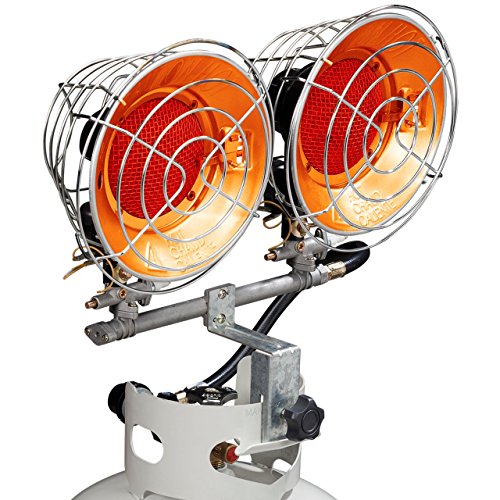
Avenger’s infrared 30,000 BTU heater provides efficient warmth with a front and rear wire guard for added safety. It is designed for quick setup on refillable propane tanks and is adaptable for camping, patios, or other outdoor spaces. The unit’s 45° swiveling burner head enables targeted heat delivery, with multiple heat settings for customizable comfort.
BILT HARD 125,000 BTU Propane Torpedo Heater

Offering a broad heating range of 75,000–125,000 BTU, this torpedo-style heater distributes warmth over up to about 3,125 sq. ft. It includes a sturdy, compact frame and CSA certification. The unit balances high output with portability, making it suitable for garages, job sites, outdoor events, and larger spaces requiring rapid heat distribution. Typical runtime depends on setting and tank size.
Benass 30,000 BTU Double Tank Top Heater
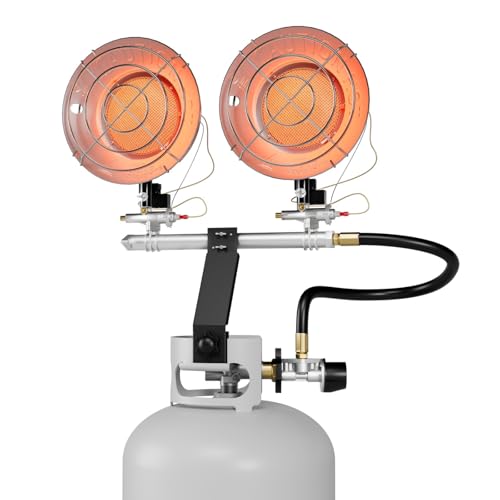
Benass offers a 30,000 BTU option with three heating modes (low, medium, high) and tip-over and shut-off safety features. It heats up to about 800 sq ft and can run for up to 20 hours on a standard 20 lb propane tank. Easy installation involves attaching the heater directly to the tank and igniting through an accessible ignition hole.
Buying Guide: Key Considerations When Choosing a Propane Tank Heater
- BTU and space coverage: Assess the target area size to determine whether 15,000–30,000 BTU or higher (75,000–125,000 BTU) better meets your needs. Infrared and radiant options offer different warmth profiles—infrared heats objects and people directly, while radiant and torpedo styles warm surfaces and air.
- Heat source and fuel compatibility: Ensure you have a compatible 20 lb propane tank or the intended connection setup. Some units are designed to attach directly to a tank for simplicity, while others require separate mounting or brackets.
- Portability and setup: Consider weight, handles, and whether you need a stable base or quick hookup for outdoor use. Tilt or tip-over safety shut-offs are critical for safety in unattended areas.
- Safety features: Look for tip-over shut-offs, heat guards, and protective mesh to prevent contact with burners. Verify that the device has CSA or equivalent safety certifications when applicable.
- Weather and wind considerations: Wind can affect performance, especially for compact outdoor heaters. Infrared options may offer more consistent warmth in breezy spaces, while heavier torpedo heaters can tolerate outdoor conditions better.
- Running time and efficiency: Check running hours at each heat level, noting that higher BTU settings consume propane more quickly. Longer runtimes are advantageous for extended outdoor events.
- Durability and materials: Look for metal housings and protective guards, particularly for frequent outdoor use or jobsite environments where dust and debris are factors.
- Compliance and usage guidance: Use heaters outdoors in well-ventilated areas with proper clearance from flammable materials. Follow manufacturer guidelines for safe operation and storage.
Across these options, buyers should balance heat output with practical needs, such as space size, portability, and safety requirements. The models shown provide a range of radiant, infrared, and torpedo designs suitable for patios, garages, camping, and job sites, ensuring options for different climate conditions and usage patterns.