Choosing the right flooring for a workout room protects your floors, dampens noise, and supports heavy gym equipment. This guide reviews five top-rated rubber and foam interlocking mats ideal for home gyms, offering cushioning, durability, and easy setup. Each option blends comfort with protection, helping you create a dedicated, low-impact workout space.
| Product | Thickness | Size / Coverage | Material Type |
|---|---|---|---|
| ProsourceFit Puzzle Exercise Mat ½ in (36 Tiles) | ½ inch | 24 in x 24 in per tile; 144 sq ft total | High-density EVA foam |
| SUPERJARE 0.56″ Thick 12 Pcs (48 Sq Ft) | 0.56 inch | 24 in x 24 in tiles; 48 sq ft | High-density EVA foam with EPDM rubber top |
| ProsourceFit Puzzle Exercise Mat ½ in (6 Tiles) | ½ inch | 24 in x 24 in per tile; 24 sq ft total | High-density EVA foam |
| ProsourceFit Puzzle Exercise Mat ½ in (12 Tiles) | ½ inch | 24 in x 24 in per tile; 48 sq ft total | High-density EVA foam |
| AIRHOP 0.56in Thick (48 Sq Ft) | 0.56 inch | 24 in x 24 in tiles; 48 sq ft | Rubber top with EVA foam core |
ProsourceFit Puzzle Mat ½ in (36 Tiles)
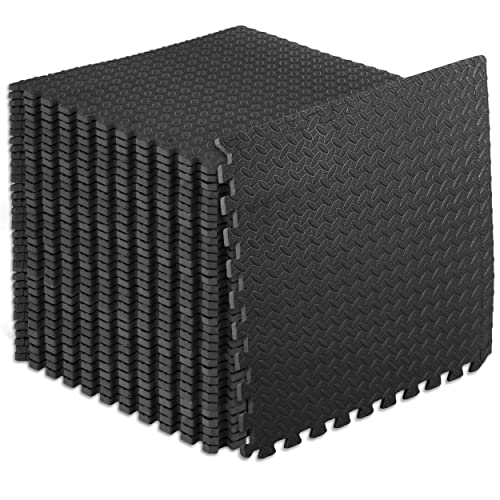
ProsourceFit’s ½-inch puzzle mats provide durable, non-skid flooring suitable for home gyms, play areas, and equipment protection. Each tile uses high-density EVA foam for cushioning and support, with a water-resistant surface to aid cleaning and maintenance. The tiles interlock to form a stable surface and can be arranged on flat, hard floors for best results. They are designed as a comfortable alternative to rubber mats, while offering good floor protection for equipment and activities across a home workout room.
SUPERJARE 0.56” Thick 12 Pcs (48 Sq Ft)

This SUPERJARE set features a dual-layer design with a dense EVA foam base and a rubber top. The rubber top improves traction and grip while the foam core cushions movements to reduce impact. It’s designed to withstand heavier equipment and protects floors from vibrations, making it ideal for home gyms with free weights, benches, and cardio boxes. The addition of a rubber top also minimizes odor and helps maintain a quieter workout space.
ProsourceFit Puzzle Mat ½ in (48 Sq Ft)

This larger ProsourceFit setup extends coverage for medium-sized workout areas. The ½-inch EVA foam tiles deliver cushioning and protection across a larger footprint, suitable for floor exercises, step routines, and light weight training. Like its smaller counterpart, it’s designed to be easy to clean, resistant to water, and suitable for use on flat, hard surfaces in a dedicated home gym.
ProsourceFit Puzzle Mat ½ in (12 Tiles)
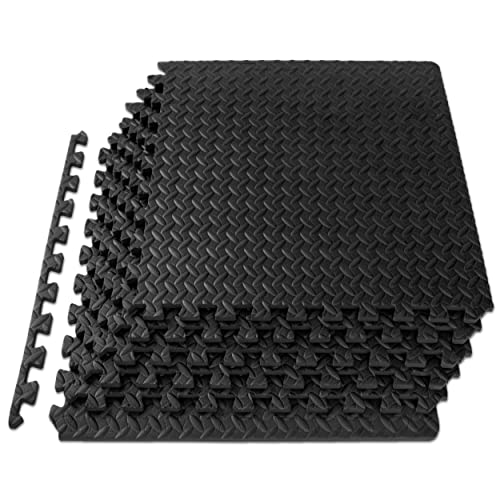
This 12-tile pack is a compact option for smaller spaces needing dedicated gym floor protection and a non-slip surface. The interlocking design ensures a seamless, stable surface for activities like yoga, aerobics, and home workouts. The EVA foam is soft enough to cushion joints while remaining durable for routine movement and equipment placement.
AIRHOP 0.56in Thick 48 Sq Ft

AIRHOP’s 0.56-inch tiles deliver a balanced blend of rubber surface top and high-density EVA foam beneath. The rubber top provides enhanced grip and protection against scratching, while the foam core cushions impact and reduces noise, contributing to a calmer home gym environment. The 12-tile setup covers 48 square feet, with interlocking edges designed to prevent shifting during intense workouts.
Buying Guide: Key Considerations For Choosing Workout Room Flooring
When selecting flooring for a home gym, consider these factors to ensure you choose the best option for your space, equipment, and routine.
- Thickness and Cushioning: Thicker mats (0.56–0.79 inches) offer more shock absorption, protecting joints during high-impact moves and heavy lifting. Thinner mats are lighter and easier to install but provide less padding.
- Material and Durability: EVA foam is common for interlocking mats due to its balance of cushion and resilience. Some mats feature a rubber top for improved grip and floor protection, especially with heavy weights.
- Interlocking Design: Puzzle-style interlocks reduce edges lifting and create a stable, seamless surface. Ensure tiles fit tightly on your floor and are easy to assemble or reconfigure.
- Floor Surface Compatibility: Flat, hard surfaces maximize performance. Carpeted or uneven floors may require underlayment or additional stabilization.
- Odor and Comfort: Rubber tops can have distinct odors. Opt for low-odor options if you’re sensitive to scents, and prioritize cushioned surfaces to reduce noise and vibration.
- Maintenance: Look for water-resistant materials that are easy to wipe clean. This helps maintain hygiene in high-traffic workout spaces.
- Weight Capacity: Heavier equipment requires mats that can bear weight without tearing or compressing excessively. Dual-layer designs (foam plus rubber top) can offer better durability for heavy setups.
- Size and Coverage: Measure your workout area and calculate tile coverage needed. Interlocking mats allow you to tailor coverage to fit your space precisely.
Overall, the best choice depends on your equipment, space, and noise considerations. For mixed usage involving cardio, free weights, and yoga, a 0.56″ to 0.79″ thick dual-layer design often provides an optimal balance of protection, stability, and durability. EVA foam options are generally lighter and more forgiving on joints, while rubber-top variants add grip and extra surface protection for heavier gear.